Grammar Essentials for Students
In the world of academia, grammar often takes center stage.
It’s one of those subjects that can feel daunting at first, but once you grasp its fundamentals, it opens up a world of clarity and expression.
Whether you are writing an essay, crafting an email, or simply engaging in a discussion, having a solid command of grammar can greatly enhance your communication skills.
Let’s explore some essential grammar concepts that can help students thrive in their academic journey.
Understanding the Building Blocks
At the heart of grammar lies a collection of rules that govern how we construct sentences. These rules are not merely arbitrary; they provide a framework that allows us to convey our thoughts accurately and effectively. Think of grammar as the structure of a house. Just as a sturdy foundation supports a home, a solid understanding of grammar supports clear communication.
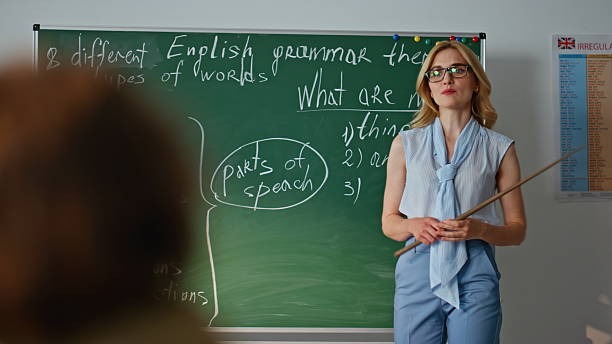
One of the first things students should familiarize themselves with is the concept of parts of speech. There are eight main parts: nouns, pronouns, verbs, adjectives, adverbs, prepositions, conjunctions, and interjections. Each plays a unique role in a sentence. For instance, nouns name people, places, or things, while verbs indicate action or a state of being. Understanding these components can help students construct sentences that are not only grammatically correct but also rich in meaning.
The Power of Sentence Structure
Once you have a handle on the parts of speech, it’s time to explore sentence structure. A sentence is essentially a complete thought, and it usually contains a subject and a predicate. The subject tells us who or what the sentence is about, while the predicate provides information about the subject.
A simple sentence, for example, contains a subject and a verb. “The dog barks.” In contrast, compound sentences combine two independent clauses with a conjunction, such as “and” or “but.” For instance, “The dog barks, and the cat meows.” Understanding how to build different types of sentences can add variety to your writing and keep your readers engaged.
A small shift toward balance comes when you begin to experiment with complex sentences. These sentences include an independent clause and one or more dependent clauses. For example, “Although the dog barks loudly, it is friendly.” This structure allows you to convey more nuanced ideas and relationships between thoughts.
Punctuation: The Unsung Hero
Punctuation is another crucial aspect of grammar that often goes overlooked. Yet, it plays a significant role in how we interpret written language. Commas, periods, question marks, and exclamation points help guide readers through your writing, indicating pauses, stops, or changes in tone.
For instance, consider the difference between “Let’s eat, Grandma!” and “Let’s eat Grandma!” The placement of a simple comma changes the entire meaning of the sentence. Proper punctuation not only clarifies your message but also reflects your attention to detail and professionalism in writing.
The Art of Verb Tenses
Verb tenses are essential for establishing the time frame of your writing. They allow you to indicate whether an action is occurring in the past, present, or future. Understanding how to use different tenses correctly can significantly enhance the clarity of your writing.
For example, the present simple tense is used for habitual actions: “She studies every night.” The past simple tense indicates completed actions: “She studied last night.” Future tense, on the other hand, suggests upcoming actions: “She will study tomorrow.” By mastering verb tenses, students can create a timeline of events that is easy for readers to follow.
Embracing Active Voice
Another important concept in grammar is the difference between active and passive voice. In active voice, the subject of the sentence performs the action. For example, “The teacher praises the student.” In passive voice, the subject receives the action: “The student is praised by the teacher.”
Active voice is often preferred in writing because it tends to be more direct and engaging. It allows the writer to convey a sense of action and immediacy, which can make your writing more compelling. However, passive voice has its place, especially when the focus is on the action itself rather than the doer.
The Importance of Style and Tone
While grammar provides the rules for constructing sentences, style and tone bring your writing to life. How you choose to express your ideas can significantly impact how they are received by your audience. A friendly, conversational tone can make your writing more relatable, while a formal tone might be more appropriate for academic papers.
Being aware of your audience is essential. Consider who will be reading your work and what tone will resonate best with them. This awareness can help you tailor your writing style to suit the context, making your communication more effective.
Practicing with Purpose
Like any skill, mastering grammar requires practice. Incorporating grammar exercises into your study routine can help reinforce what you’ve learned. Whether it’s through writing prompts, grammar quizzes, or peer review sessions, finding ways to practice can deepen your understanding and boost your confidence.
Reading widely can also enhance your grammar skills. Exposure to well-written texts can help you internalize correct grammar usage and inspire your writing style. Pay attention to how skilled authors construct their sentences, use punctuation, and convey their ideas. This observational learning can be incredibly beneficial.
Finding Your Voice
Ultimately, grammar is about more than just following rules; it’s about finding your unique voice and expressing your thoughts clearly. As you navigate your academic journey, remember that it’s perfectly normal to make mistakes. Each error is an opportunity for growth. Embrace the learning process, and don’t hesitate to seek help when needed.
In the end, a solid understanding of grammar can empower you to communicate with confidence. By mastering the essentials, you’ll be well-equipped to tackle any writing challenge that comes your way. So take a deep breath, embrace the journey, and enjoy the art of crafting your words. Your voice matters, and grammar is the tool that will help you share it with the world.